
Awarness Raising
Establishing a strong women movement to fight the challenges of the 21st century by raising awareness and organising womenfolk. Working to build awareness at the grassroots level on violence against women.

Resisting Violence Against Women
We are continuously working for accelerating a social movement to resist violence against women ( VAW). We are is working to address the challenge of Revivalism of religious fundamentalist groups resisting Women's Rights who are also getting support from democratic parties.

Shelter Home (Rokeya Sadan)
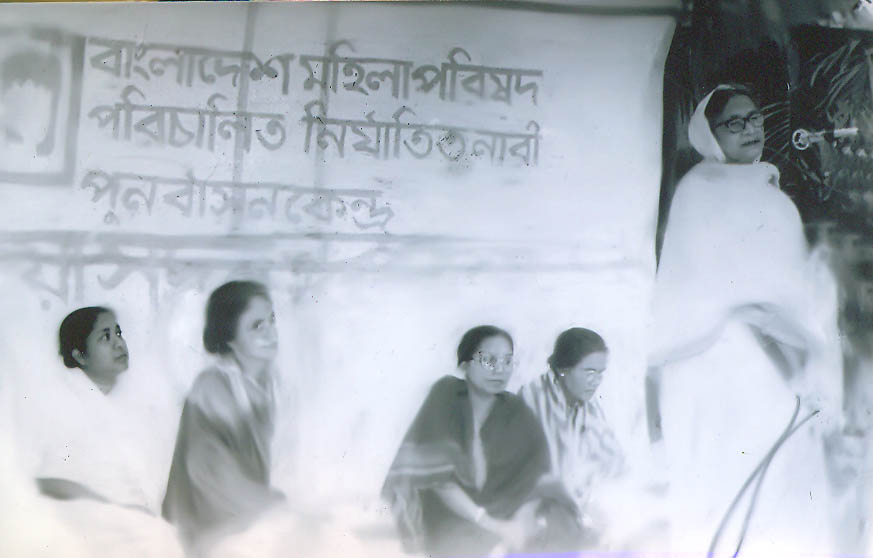
BMP run Rokeya Sadan is a transient safe shelter home for women and girl child who are victims of violence and social injustice. A total number of 6 including 2 new victims were given shelter in Sadan.

Movement & Advocacy Lobby
BMP did advocacy lobby in multidimentional approach. BMP also did advocacy lobby in the global platform like UNCEDAW Committee, UN Human Rights Council, UN Women, global Girls Not Bride (GNB).
Capacity Building
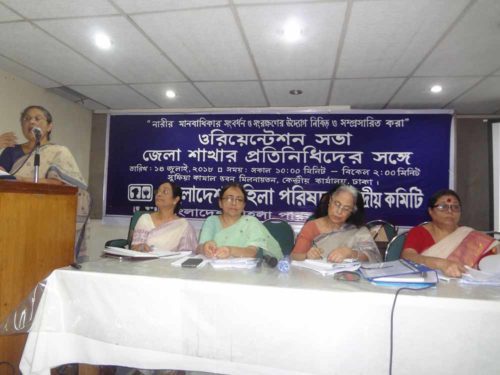
As a part of law reform movement to ensure gender equity and gender justice. BMP continued advocacy and lobby with Policy Maker, Human Rights Commission and UN organizations and other women and human rights organization for enactment of Uniform Family Code (UFC)
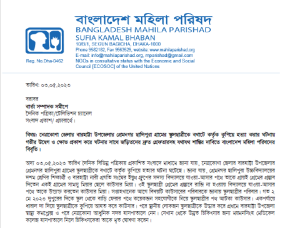
Bangladesh Mahila Parishad expressed strong condemned and deep concern in the incident a schoolgirl of Premnagar Chalipura village was stabbed to death by miscreants of Barhatta upazila of Netrakona district. Bangladesh Mahila Parishad demanding the quick arrest and appropriate punishment of the perpetrator.
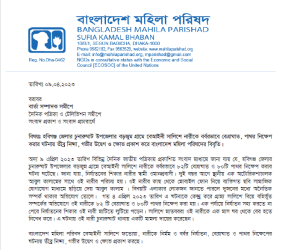
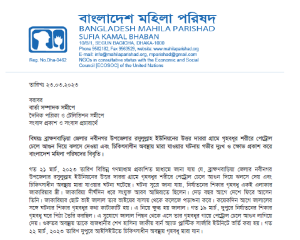
Bangladesh Mahila Parishad is expressing deep anxiety and grief at the incidence of burning a housewife by pouring patrol on her body in Brakshanbaria District of Nabinagar Upazila and her death while she was under treatment in the hospital of Sheikh Hasina National Institute of Burn & Plastic Surgery. Bangladesh Mahila Parishad strongly demands exemplary punishment of the perpetrator.
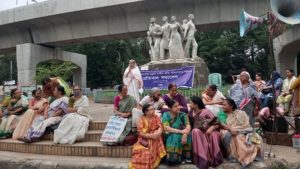
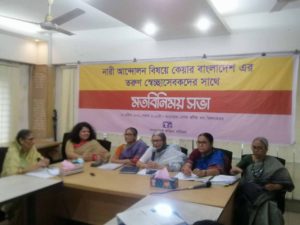
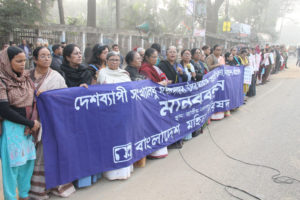
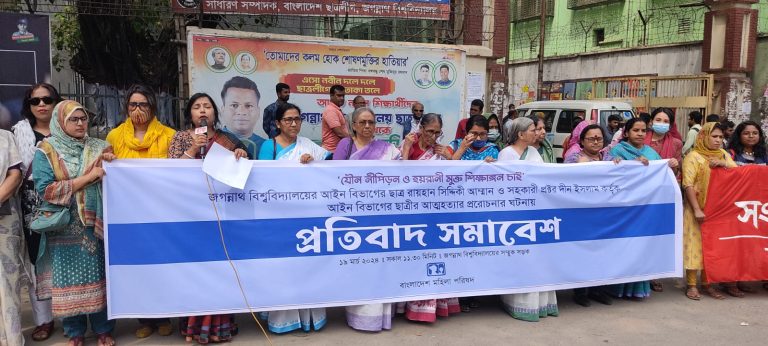
“Protest Gathering by Bangladesh Mahila Parishad Demanding Justice for Fairuz Sadaf Abantika”
On March 19th at 11:30 am in front of Jagannath University, Bangladesh Mahila Parishad held a protest gathering demanding the trial of student from the
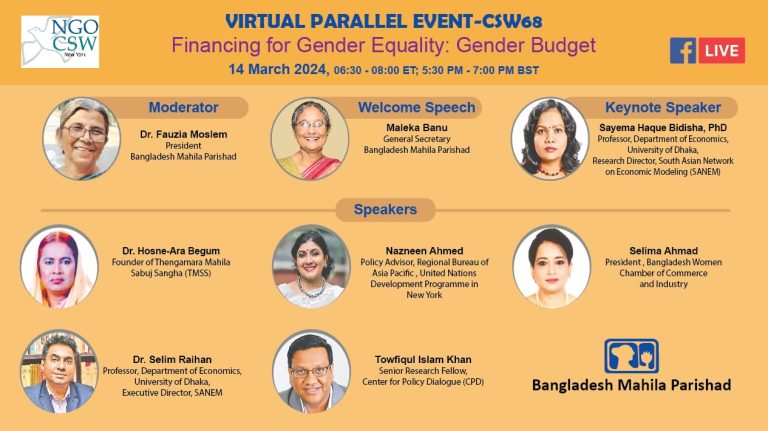
‘CSW – 68 Parallel Event ‘Financing for Gender Equality: Gender Budget’
To promote gender equality, Bangladesh Mahila Parishad (BMP) organized an online parallel event titled “Financing for Gender Equality: Gender Budget” at the Commission on the
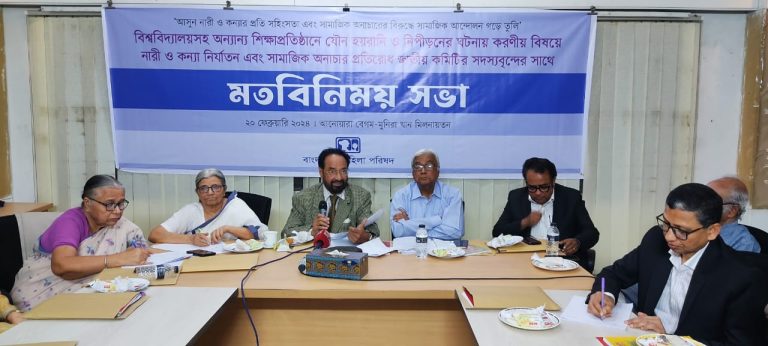
View Exchange Meeting on Prevention of Sexual Harassment in Universities and Other Educational Institutions
On 20 February 2024, Bangladesh Mahila Parishad (BMP) organized a view exchange meeting on the prevention of sexual harassment in universities and other educational institutions